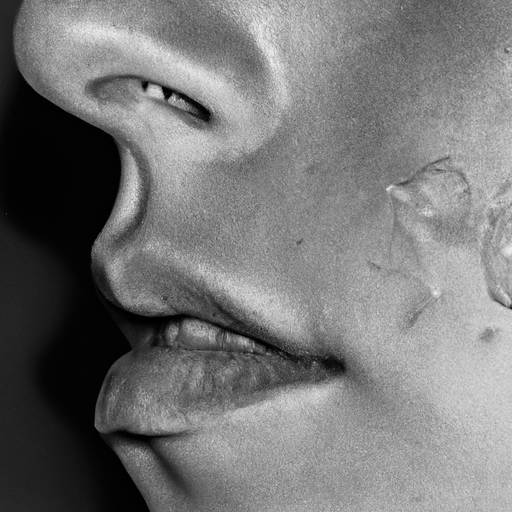
Whether it’s a childhood accident, a bout of severe acne, or an unfortunate encounter with a sharp object, facial scars can be a source of self-consciousness and discomfort for many individuals. In this article, we’ll take a closer look at the causes behind facial scarring, explore the different types that can occur, and delve into the various treatment options available to help minimize their appearance. From understanding the underlying factors to uncovering the most effective remedies, we’ve got you covered when it comes to gaining a deeper insight into facial scarring.
Causes of Facial Scarring
Facial scarring can occur for a variety of reasons. One of the most common causes is acne. Acne breakouts can often leave behind scars, especially when they become inflamed and deep. Injuries, such as cuts or wounds to the face, can also lead to scarring. Surgical procedures, such as those done to remove tumors or repair facial fractures, can cause scarring as well. Burns, whether from heat, chemicals, or radiation, can leave lasting scars on the face. Infections, particularly those that are severe or not properly treated, can result in scarring. Lastly, genetic factors can contribute to how an individual’s skin heals and whether or not they are prone to developing scars.
Types of Facial Scarring
There are several different types of facial scars that can occur, each with its own unique characteristics. Atrophic scars are characterized by their depressed appearance, often forming small pits or indentations in the skin. Hypertrophic scars, on the other hand, are raised and raised above the surrounding skin. Keloid scars are similar to hypertrophic scars, but they extend beyond the boundaries of the original injury or wound. Contracture scars usually occur after burns and can cause tightness or pulling of the skin. Boxcar scars are wide and have sharply defined edges, resembling a box. Rolling scars are less defined and give the skin a wavy or uneven texture. Ice pick scars are deep and narrow, resembling small holes in the skin. Post-inflammatory hyperpigmentation (PIH) refers to dark spots or patches that develop after an inflammatory skin condition or injury. Lastly, striae distensae, commonly known as stretch marks, can also be considered a type of facial scarring when they occur on the face.
Treatment Options for Facial Scarring
Fortunately, there are several treatment options available for facial scarring. One non-invasive approach is the use of topical treatments. Silicone-based gels have been shown to effectively reduce the appearance of scars by improving hydration and reducing inflammation. Onion extract gel or cream can also be beneficial in minimizing scar appearance. Vitamin E oil is commonly used for its moisturizing properties and can help improve the overall texture of the skin. Corticosteroid creams can be useful in reducing inflammation and redness associated with scars, while hyaluronic acid creams can help hydrate the skin and promote healing.
For more severe scarring, there are various procedures that can be performed. Dermabrasion involves the removal of the top layers of the skin using a rotating brush or diamond wheel. This procedure helps to resurface the skin and improve its overall texture. Recovery from dermabrasion typically takes a few weeks, and multiple treatments may be necessary for optimal results. However, dermabrasion has been shown to be effective in reducing the appearance of facial scars.
Microdermabrasion is a less invasive alternative to dermabrasion that uses tiny crystals or a diamond-tipped wand to exfoliate the skin. This procedure is less aggressive and requires minimal recovery time. While it may not be as effective as dermabrasion for deep scars, microdermabrasion can still improve the texture and appearance of the skin.
Chemical peels are another option for treating facial scarring. During this procedure, a chemical solution is applied to the skin to remove the top layers and promote collagen production. Recovery from a chemical peel can vary depending on the depth of the peel, but generally, the skin will need time to heal and regenerate. Chemical peels have shown promising results in reducing the appearance of facial scars, especially for superficial scars.
Laser therapy is a popular treatment option for facial scarring. Fractional laser resurfacing involves the use of a laser to remove damaged skin cells and stimulate collagen production. Pulsed-dye laser therapy targets blood vessels to reduce redness and inflammation associated with scars. CO2 laser resurfacing is a more aggressive form of laser therapy that can be used for deeper scars. Recovery from laser therapy can take several weeks, and multiple treatments may be required. However, laser therapy has been shown to be effective in improving the appearance of facial scars.
Microneedling is another innovative procedure for treating facial scarring. It involves the use of a device with tiny needles that create microchannels in the skin, stimulating collagen production and promoting skin regeneration. Recovery from microneedling is minimal, with some redness and mild swelling that resolves within a few days. Multiple sessions are usually needed to achieve optimal results, but microneedling has proven effective in reducing the appearance of facial scars.
Cryosurgery is a procedure that involves freezing the scar tissue to destroy it. This treatment option is often used for keloid scars and can be performed in a dermatologist’s office. Recovery from cryosurgery typically involves some redness and swelling that resolves within a few days. Surgical scar revision is another option for more severe scars. This procedure involves surgically removing the scar tissue and closing the wound with sutures. While this option may be more invasive, it can provide significant improvement in the appearance of facial scars.
Dermal fillers, such as hyaluronic acid-based fillers, can be used to fill in depressed or atrophic scars. By injecting the filler into the scar, it can help elevate the skin to match the surrounding area and reduce the appearance of the scar. The results of dermal fillers are temporary, typically lasting several months to a year, but they can provide immediate improvement in the appearance of facial scars.
Corticosteroid injections are often used for raised or hypertrophic scars. The medication is directly injected into the scar tissue to help reduce inflammation and flatten the scar. Multiple injections may be needed over time to achieve the desired results, but corticosteroid injections have proven effective in improving the appearance of facial scars.
In conclusion, facial scarring can be caused by a variety of factors, including acne, injuries, surgical procedures, burns, infections, and genetic factors. There are various types of facial scarring, each with its own distinct characteristics. Thankfully, there are numerous treatment options available, ranging from non-invasive topical treatments to more invasive procedures. Topical treatments, such as silicone-based gels and corticosteroid creams, can help improve the appearance of scars. Procedures like dermabrasion, microdermabrasion, chemical peels, laser therapy, microneedling, cryosurgery, surgical scar revision, dermal fillers, and corticosteroid injections offer different approaches to treating facial scars. It is essential to consult with a dermatologist or skincare professional to determine the most suitable treatment option based on the specific type and severity of facial scarring. With advancements in technology and medical treatments, achieving smoother and more even-toned skin is indeed possible.