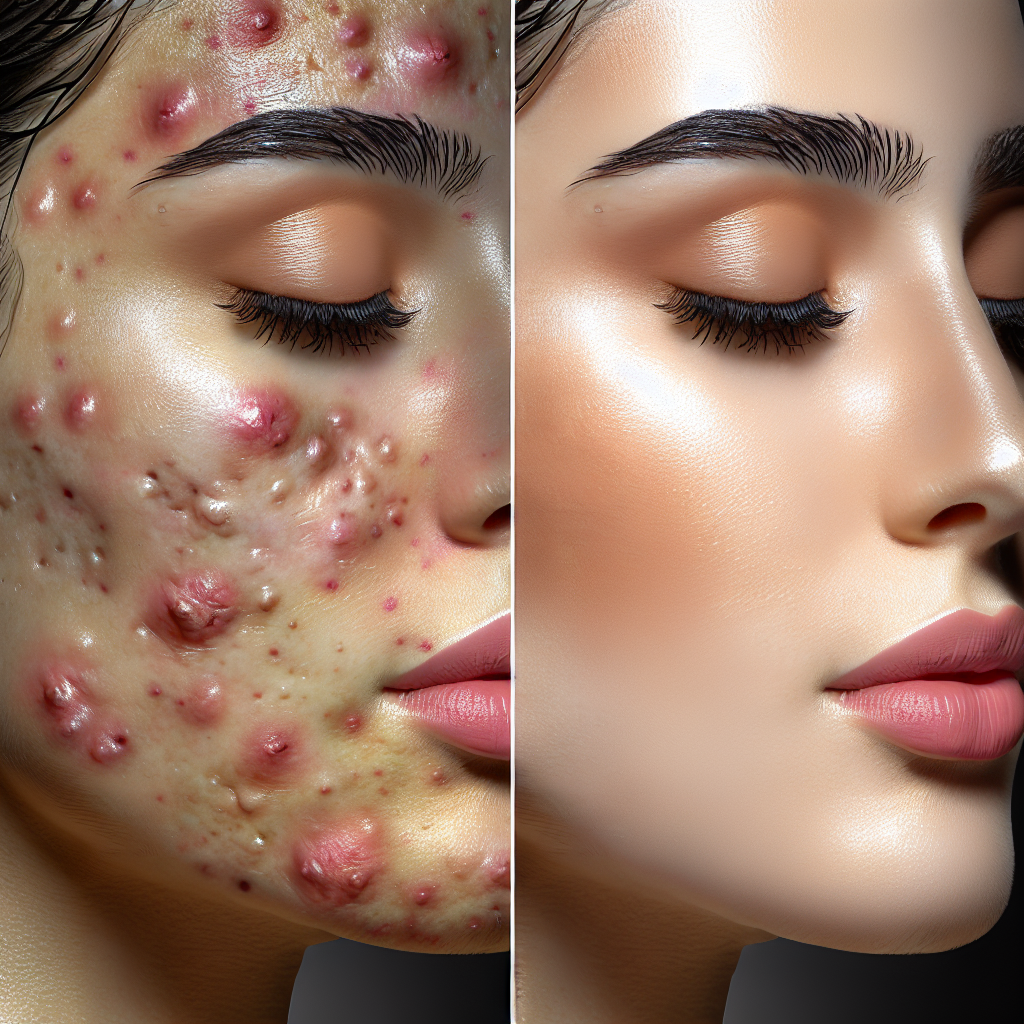
If you’ve struggled with acne scars, you’ve likely come across numerous remedies claiming to help improve their appearance. But have you ever wondered if there’s any scientific evidence behind these claims? In this article, we’ll explore the science behind one popular ingredient: niacinamide. Could this powerhouse compound really help fade acne scars? Let’s take a closer look at the research and find out if niacinamide is truly a game-changer in the battle against stubborn acne scars.
What is Niacinamide?
Definition and background
Niacinamide, also known as nicotinamide, is a form of vitamin B3. It is a water-soluble vitamin that plays a crucial role in various bodily functions. Niacinamide is commonly found in many skincare products due to its numerous benefits for the skin.
Properties and usage
Niacinamide possesses several properties that make it an effective ingredient for skincare. It has anti-inflammatory properties, helps reduce hyperpigmentation, and promotes the production of collagen. Due to these properties, niacinamide has gained popularity as a potential treatment for acne scars.
Understanding Acne Scars
Causes of acne scars
Acne scars are the result of inflamed acne lesions that have caused damage to the skin’s underlying tissues. These scars can be caused by various factors such as hormonal imbalances, genetics, and improper skincare routines. Picking or popping acne can also lead to the formation of scars.
Types of acne scars
There are several types of acne scars, including atrophic scars, hypertrophic scars, and keloid scars. Atrophic scars are characterized by depressions or indentations in the skin, while hypertrophic scars and keloid scars result in raised and thickened areas of the skin.
Effects on skin appearance
Acne scars can have a significant impact on the appearance of the skin, causing uneven skin texture, redness, and hyperpigmentation. They can make individuals self-conscious and reduce their confidence. Finding effective treatments for acne scars is essential for improving skin appearance and overall well-being.
How Does Niacinamide Work?
Anti-inflammatory properties
Niacinamide exhibits potent anti-inflammatory properties, which can help reduce the inflammation associated with acne scars. By calming inflammation, niacinamide can help prevent the formation of additional scars and promote the healing process.
Reduction of hyperpigmentation
Hyperpigmentation is a common concern for those with acne scars. Niacinamide has been shown to inhibit the transfer of pigment to the skin cells, leading to a reduction in hyperpigmentation. This ingredient can help even out skin tone and fade the dark spots caused by acne scars.
Collagen production and scar healing
Niacinamide plays a vital role in the production of collagen, a protein that helps maintain the structure and elasticity of the skin. By stimulating collagen production, niacinamide can aid in the healing of acne scars and promote smoother skin texture.
Scientific Studies on Niacinamide and Acne Scars
Study 1: Evaluation of topical niacinamide for acne scars
A study published in the Journal of Cosmetic Dermatology evaluated the efficacy of topical niacinamide in treating acne scars. The results showed that participants who used niacinamide experienced a significant improvement in the visibility of their acne scars. The study concluded that niacinamide can be a beneficial treatment option for individuals with acne scars.
Study 2: The effect of niacinamide on post-inflammatory hyperpigmentation
Another study, published in the Journal of Drugs in Dermatology, investigated the effect of niacinamide on post-inflammatory hyperpigmentation (PIH) caused by acne. The study found that participants who applied a niacinamide-containing cream experienced a reduction in PIH and an improvement in overall skin tone. These findings further support the use of niacinamide for treating acne scars and hyperpigmentation.
Benefits of Niacinamide for Acne Scars
Reduction in acne scar redness
One of the significant benefits of niacinamide is its ability to reduce the redness associated with acne scars. The anti-inflammatory properties of niacinamide help soothe the skin and minimize redness, resulting in a more even complexion.
Improvement in skin texture
Niacinamide can also improve the texture of the skin affected by acne scars. By promoting collagen production, niacinamide helps to heal the damaged skin and smooth out any irregularities caused by scarring. This leads to a more refined and smoother skin texture.
Lightening of hyperpigmentation
Hyperpigmentation is a common concern for those with acne scars, as it can create dark spots on the skin. Niacinamide has been found to effectively lighten hyperpigmentation and even out skin tone. Regular use of niacinamide can lead to a more uniform complexion and a reduction in the visibility of hyperpigmentation caused by acne scars.
How to Use Niacinamide for Acne Scars
Choosing the right product
When using niacinamide for acne scars, it is important to choose the right product. Look for products that contain a sufficient concentration of niacinamide, typically around 2-5%. Additionally, consider the formulation of the product, ensuring it is suitable for your skin type and preferences.
Incorporating niacinamide into skincare routine
To effectively incorporate niacinamide into your skincare routine, start by cleansing your face with a gentle cleanser. After cleansing, apply a toner if desired, and then apply a niacinamide-containing serum or cream to the affected areas. Follow this with a moisturizer and sunscreen to protect the skin. It is best to use niacinamide products in the morning and evening for optimal results.
Usage and application tips
When using niacinamide for acne scars, it is important to follow the instructions provided by the product manufacturer. Start by using the product once a day and gradually increase the frequency if your skin tolerates it well. It is recommended to perform a patch test on a small area of the skin before applying the product to the entire face to check for any adverse reactions.
Potential Side Effects and Precautions
Allergic reactions
While niacinamide is generally well-tolerated, some individuals may experience allergic reactions. It is essential to be aware of any signs of an allergic reaction, such as redness, itching, or swelling. If any adverse reactions occur, discontinue use and consult a healthcare professional.
Skin irritation or sensitivity
Niacinamide is considered safe for most individuals, but in some cases, it can cause skin irritation or sensitivity. If you notice any signs of irritation, such as redness, dryness, or a burning sensation, reduce the frequency of use or discontinue use altogether.
Interaction with other products
Niacinamide is generally safe to use alongside other skincare products. However, it is important to avoid using niacinamide in combination with products containing vitamin C, as they may counteract each other’s effectiveness. If using other active ingredients or prescription medications, consult a dermatologist or healthcare professional before incorporating niacinamide into your skincare routine.
Other Treatment Options for Acne Scars
Chemical peels
Chemical peels are a popular treatment option for acne scars. They involve the application of a chemical solution to the skin, which helps exfoliate the top layer and promote the growth of new, smoother skin. Chemical peels can improve the appearance of acne scars and even out skin tone.
Microdermabrasion
Microdermabrasion is a non-invasive procedure that uses a device to exfoliate the outer layer of the skin. This helps to remove dead skin cells and stimulate collagen production, resulting in smoother skin texture and a reduction in the appearance of acne scars.
Laser therapy
Laser therapy is a more intensive treatment option for acne scars. It involves the use of laser technology to resurface the skin and stimulate collagen production. Laser therapy can significantly improve the appearance of acne scars by promoting scar remodeling and reducing redness.
Expert Opinions on Niacinamide for Acne Scars
Dermatologist’s perspective
Dermatologists often recommend niacinamide as a treatment for acne scars. They highlight its anti-inflammatory properties, ability to reduce hyperpigmentation, and promotion of collagen production. Dermatologists also emphasize the importance of using niacinamide as part of a comprehensive skincare routine for optimal results.
Skincare specialist’s view
Skincare specialists also recognize the benefits of niacinamide for acne scars. They highlight its effectiveness in reducing redness, improving skin texture, and lightening hyperpigmentation. Skincare specialists often emphasize the importance of choosing the right niacinamide product and incorporating it into a personalized skincare routine.
Conclusion
In conclusion, niacinamide is an effective ingredient for treating acne scars. It possesses anti-inflammatory properties, reduces hyperpigmentation, and stimulates collagen production. Scientific studies support the efficacy of niacinamide in improving the appearance of acne scars. When using niacinamide, it is essential to choose the right product, incorporate it into a consistent skincare routine, and be mindful of potential side effects and interactions with other products. By utilizing niacinamide alongside other treatment options, such as chemical peels, microdermabrasion, or laser therapy, individuals can significantly improve the appearance of acne scars and achieve smoother, more even-toned skin. Consultation with a dermatologist or skincare specialist is recommended for personalized advice and guidance on incorporating niacinamide into a skincare routine. With regular use and proper skincare practices, you can harness the benefits of niacinamide and achieve a more confident and radiant complexion.